A canelé and a pudim have quite a bit in common. Both begin with milk, eggs, and sugar, and both have a wonderful affection for caramel. Yet they couldn't be more different, which is part of the fun. A canelé has a deeply browned, almost bittersweet crust surrounding a tender, honeycombed interior, while pudim, much like flan or crème caramel, is silky custard bathed in burnt sugar syrup. One offers that marvelous contrast between crisp and tender; the other lets caramel and custard mingle with every spoonful.
Pudim Queimado began with a little lesson in burnt sugar, learned years ago from a mother who knew her way around a good pudim. Her caramel was always cooked a shade darker, with just enough bitterness to keep the sweet, silky custard in check. It's the sort of flavor that stays with you. And years later, while a canelé recipe was being tinkered with, that bittersweet caramel came to mind. Why not give the canelé a little of that same delicious contrast?
The answer was to incorporate burnt sugar caramel directly into the batter, giving the canelé a deeper, rounder caramel flavor without simply making it sweeter. Vanilla bean, nutmeg, and fragrant mace bring out the warm, milky notes of its custardy center.
There were a couple of other familiar flavors waiting to join in. Rapadura, an unrefined cane sugar traditionally sold in little molded mounds, was another childhood favorite introduced by that same mother. It has a mellow, almost molasses-like richness that's quite different from ordinary sugar. And then there's cachaça, the fragrant spirit made from sugarcane juice, remembered from the special bottles she would bring back from trips to Brazil. Both seemed particularly well suited to a little burnt sugar.
Together, rapadura and cachaça lend their richness and fragrance to a calda de açúcar queimada, a bittersweet caramel that finds its way into the canelé's characteristic honeycombed crumb. The rapadura brings depth, while the cachaça adds a gentle sugarcane perfume.
And then comes the best part: the first bite. A deeply caramelized shell gives way to a soft, custardy center, with the lingering warmth of burnt sugar, delicate spice, and just enough bitterness to make you want another.
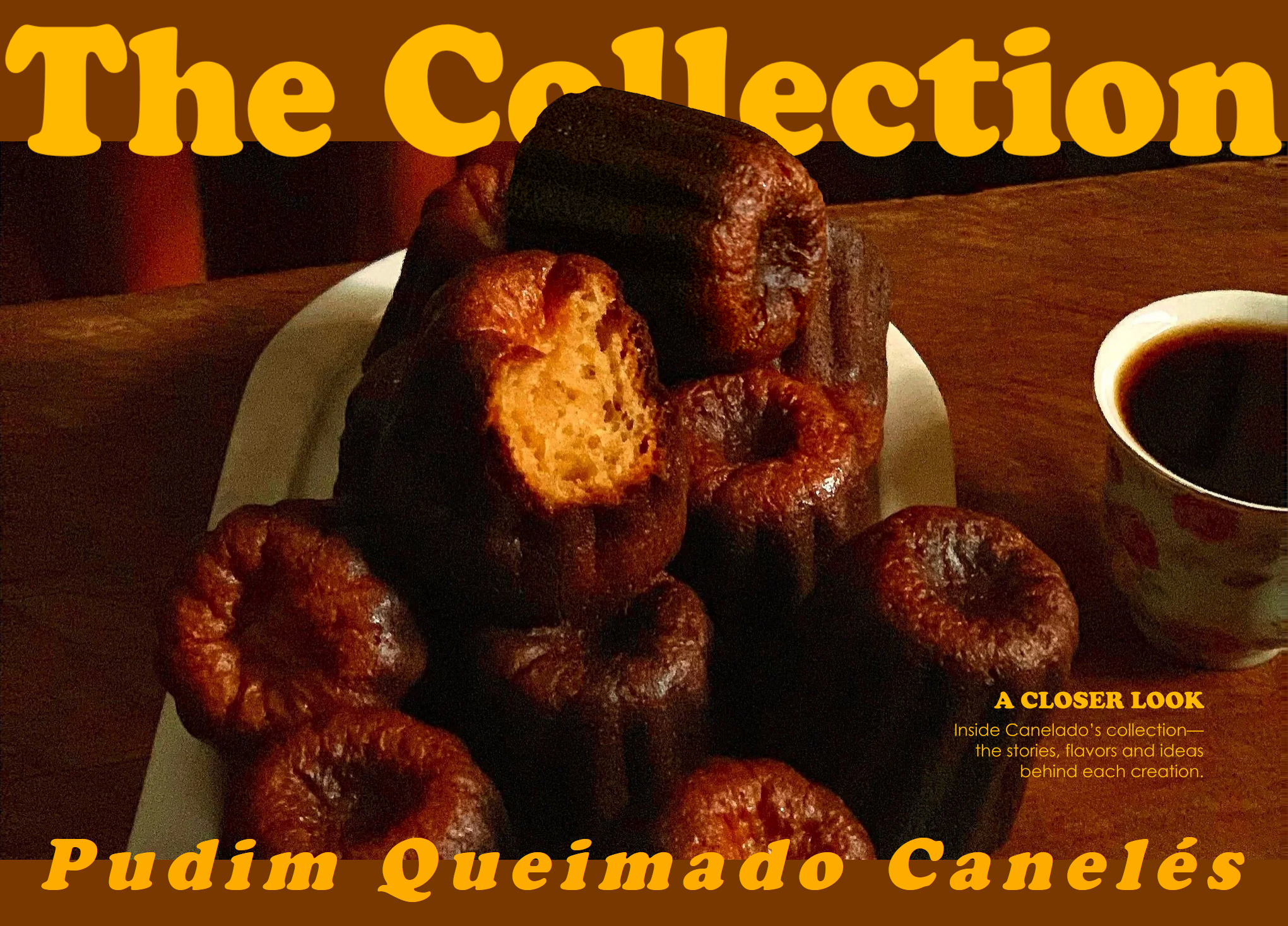
TWO CUSTARDS, ONE IDEA.

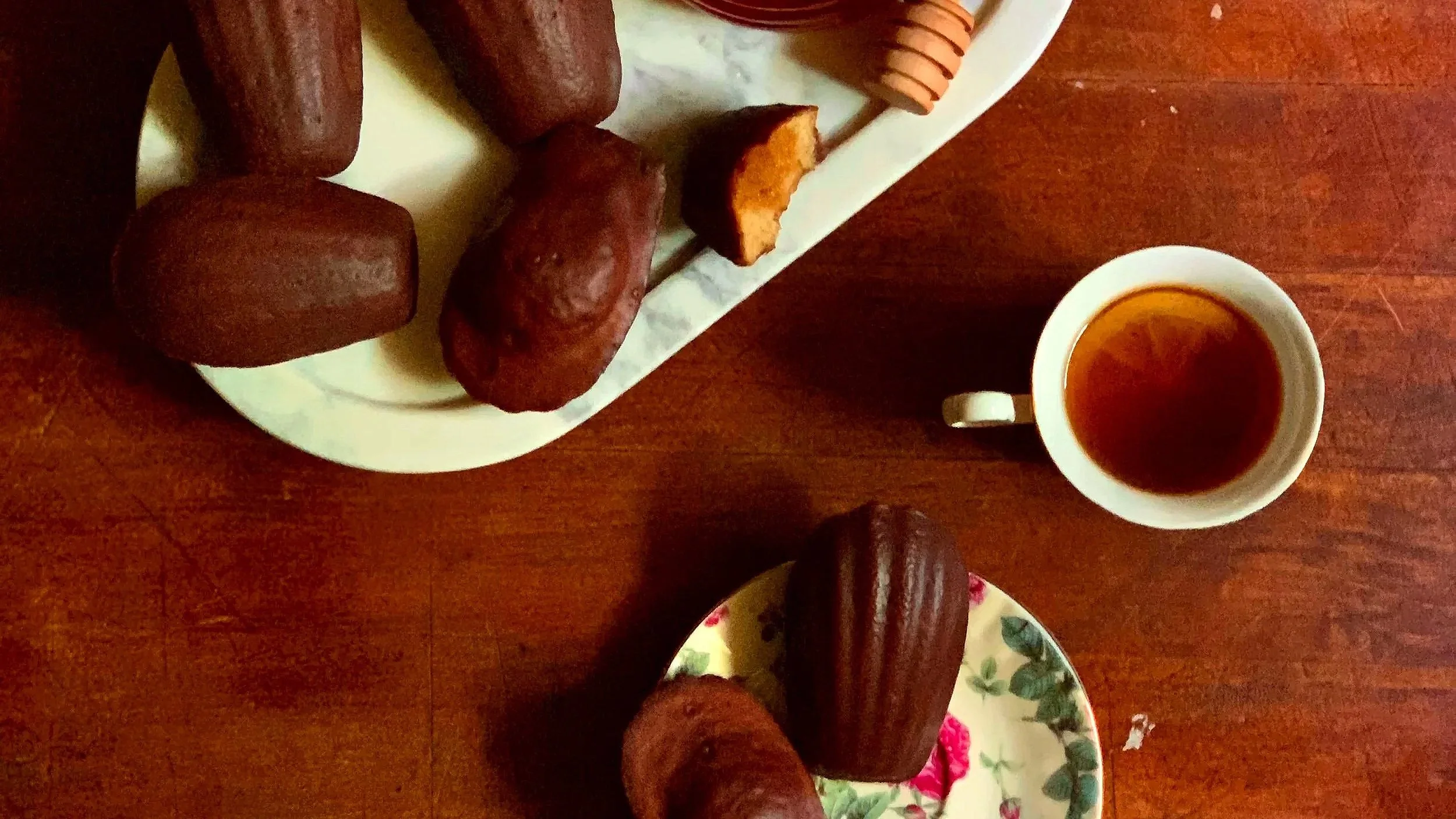
Madeleines
Pão de Mel
Sometimes the inspiration for a new pastry is hiding in a familiar recipe. Honey has always been an important part of Canelado’s original madeleine batter, lending its delicate fragrance and helping to keep the buttery crumb beautifully tender. It was that honey that brought to mind another much-loved little cake: pão de mel.
Pão de mel translates to “honey bread,” although the name hardly does it justice. A favorite in Brazil, it’s a fragrant, honey-spiced cake traditionally covered in chocolate, sometimes with a little doce de leite filling. The honey gives it a sweetness all its own, the spices bring warmth, and the chocolate adds a richness that makes the combination especially good.
With honey already in the batter, the familiar flavors of pão de mel were a natural next step. Warm spices and orange zest bring their own fragrance, the orange adding a bright note that complements both honey and chocolate. Baked until golden at the edges, the little shell-shaped cakes are finished with a delicate chocolate glacê and a kiss of doce de leite tucked inside.
The result is a madeleine with all the buttery tenderness that makes these little cakes so appealing, but with the deep fragrance of honey and spice, a hint of orange, and the richness of chocolate and doce de leite. It's a little richer, a little more fragrant, and every bit as lovely as a madeleine should be.
IT STARTED WITH HONEY.

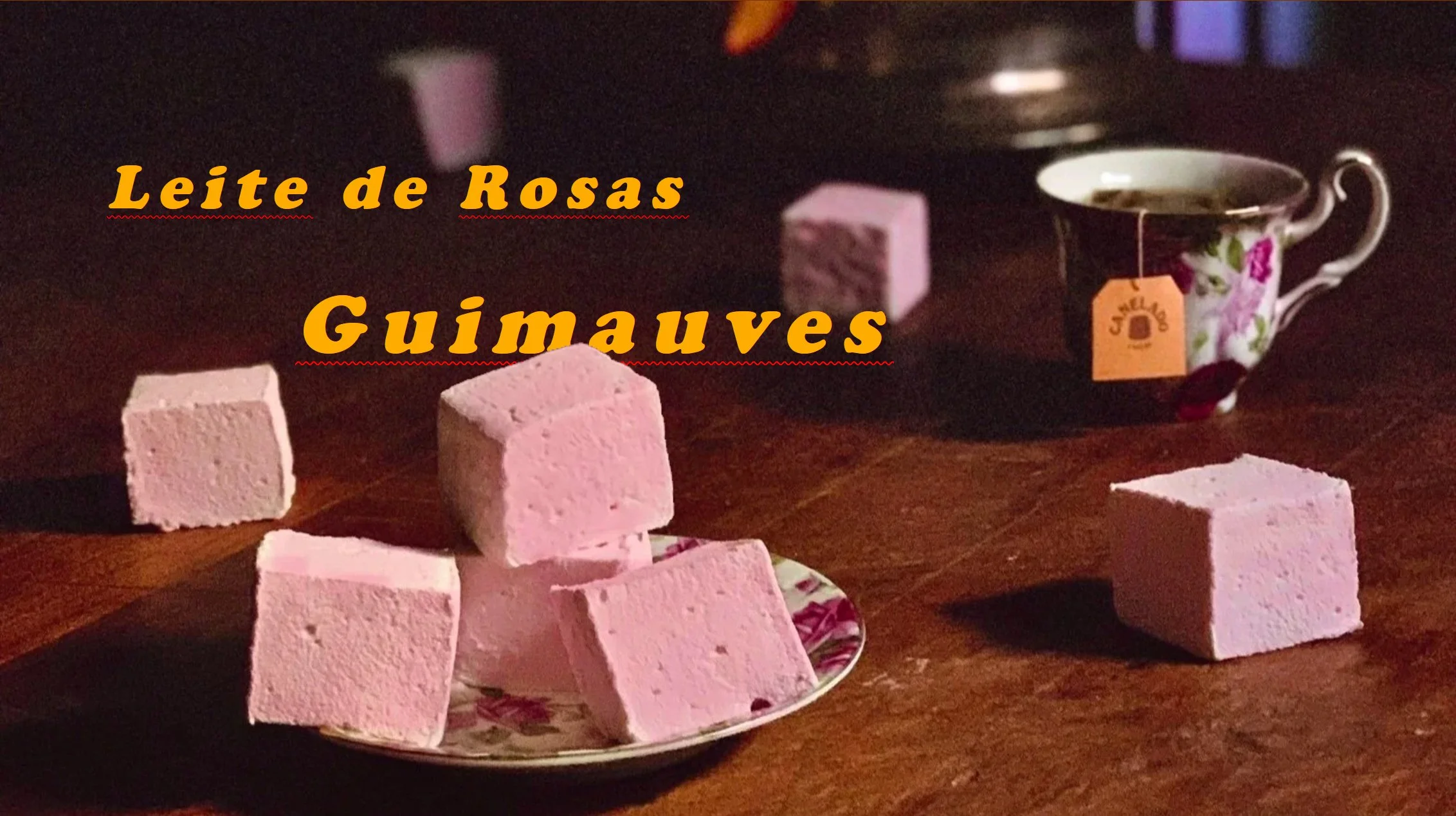
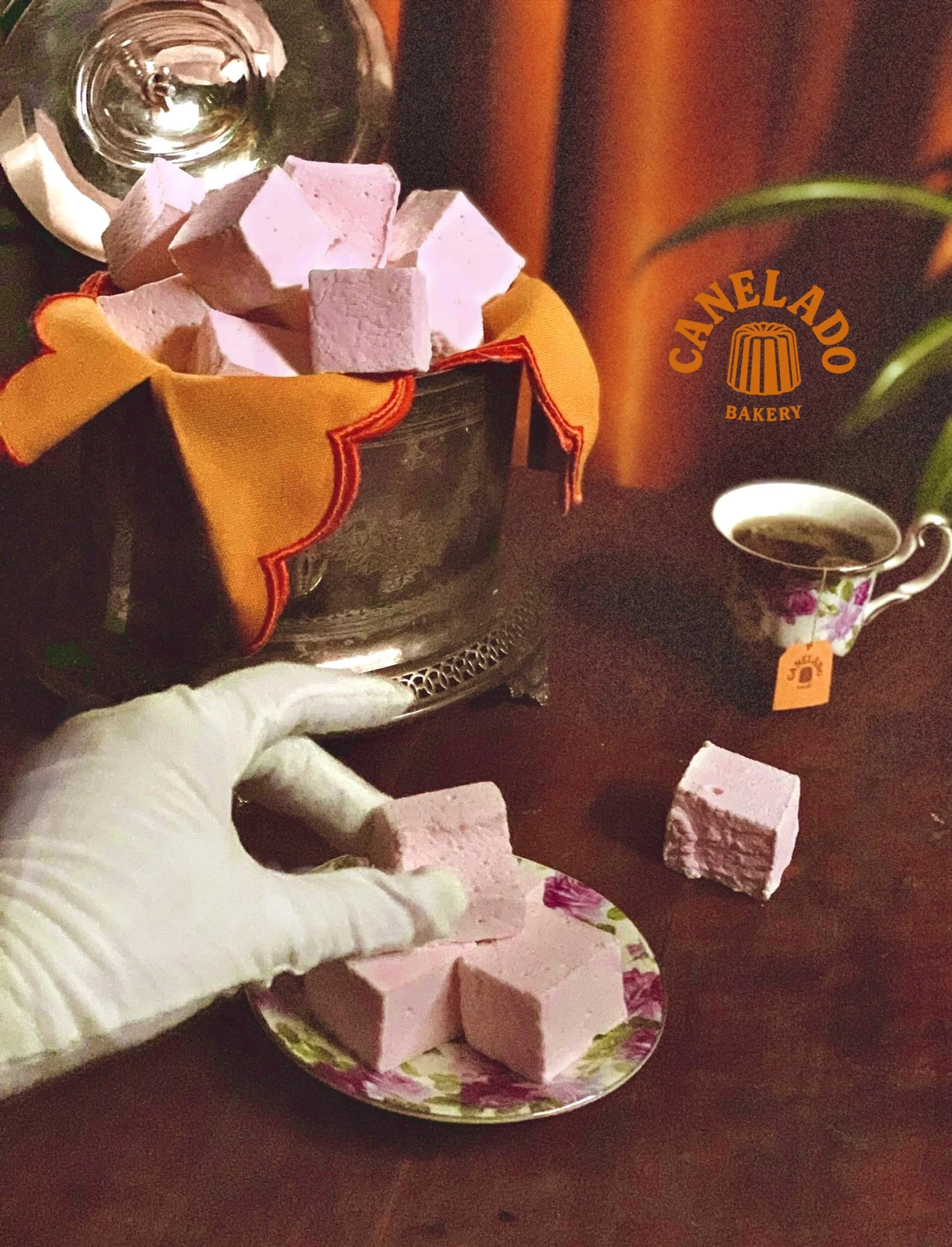
It’s remarkable what a fragrance can remember. The faintest trace of perfume in the air can bring someone to mind so vividly that, for a moment, it feels as though they’ve never left. Leite de Rosas began with such a memory: a grandmother’s perfume, its familiar scent of roses lingering in the room long after she’d gone.
A marshmallow might seem an unlikely way to capture a perfume, but there’s something rather wonderful about its ability to hold a fragrance. French guimauves are especially delicate, their remarkable texture achieved through the careful whipping of warm sugar syrup into a billowy, airy cloud. The result is a confection of extraordinary tenderness, one that barely resists the first bite before beginning to melt on the tongue.
In Leite de Rosas, the rose is every bit as present in the flavor as it is in the fragrance. Sweet cream lends a mellow richness, while vanilla bean brings warmth and a familiar sweetness. The rose is unmistakable but beautifully restrained, its floral sweetness softened by the cream and vanilla.
THE MEMORY OF ROSES.
Cut by hand into generous little cubes, these guimauves seem to disappear almost as quickly as they arrive. The rose, however, stays a little longer, its flavor and fragrance lingering like perfume in the air. And perhaps that’s the loveliest thing about Leite de Rosas: how something so fleeting can remind you of something you’ve never quite forgotten.

Paçoquinha
Sablés
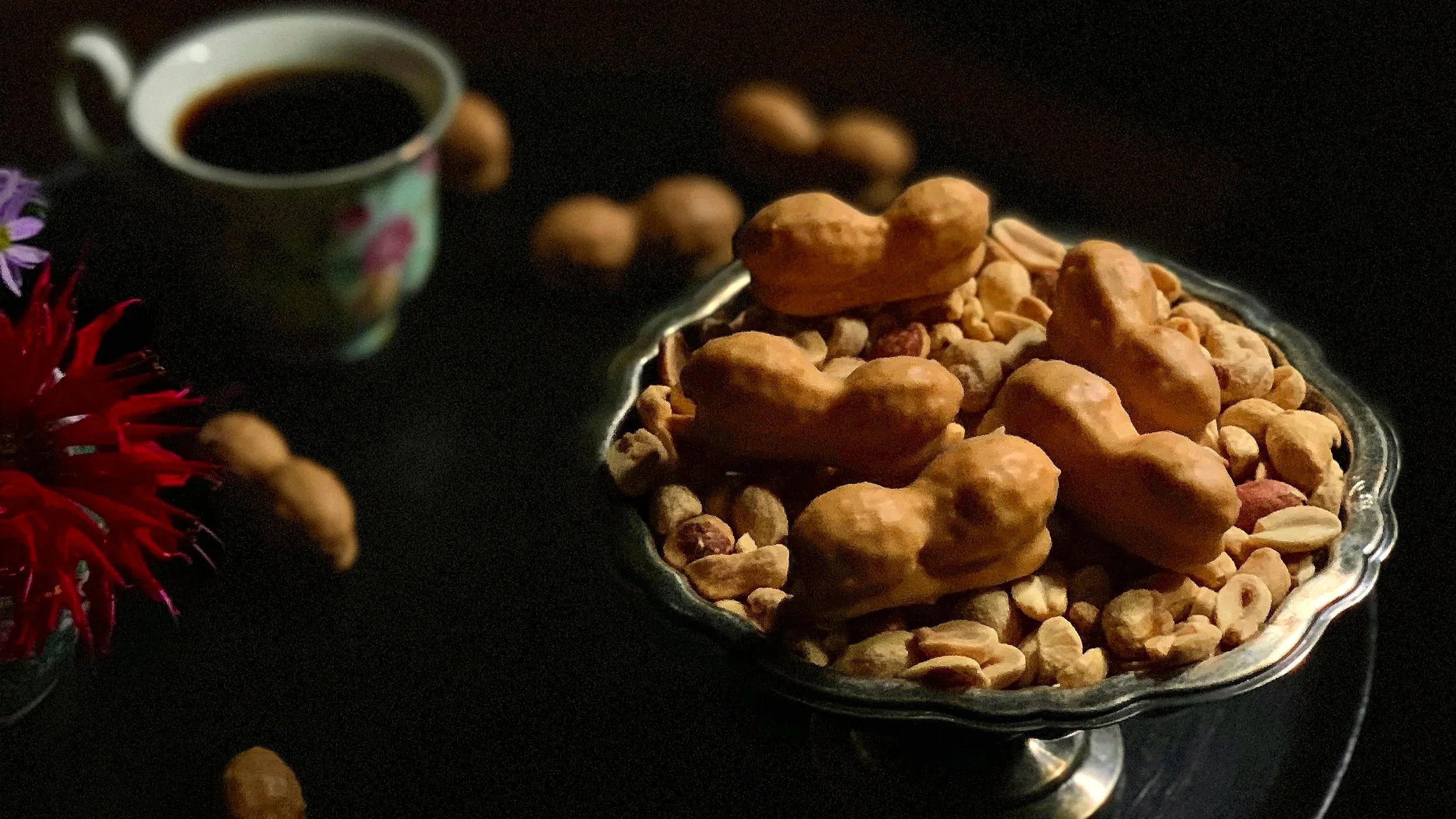
There’s something particularly delightful about the way paçoquinha crumbles. This beloved little peanut confection takes its name from paçoca, derived from the Tupi word pa’soka, meaning “to crumble” or “to pound in a mortar.” It’s a fitting name for a sweet traditionally made by pounding roasted peanuts with sugar and a touch of salt, creating a wonderfully sandy texture that seems to melt the moment it touches the tongue.
As it happens, the French have a fondness for sandy sweets, too. Their sablé, a buttery little cookie whose name comes from the French word for sand, is prized for much the same quality. Crisp at first, then tender, it’s the sort of cookie that makes a few crumbs on your shirt seem like a small price to pay.
Paçoquinha brings these two favorites together, with a few surprises of its own. Finely ground roasted peanuts and fragrant roasted peanut oil give the sablé its deep peanut flavor, while mandioca contributes to its delicate texture. Cinnamon, cardamom, and ginger lend warmth, while coriander, cumin, and a gentle touch of pepper add a lovely aromatic complexity. Together, they form a harmonious blend of spices that beautifully complements the richness of the roasted peanuts.
A thin peanut glacê with hints of caramelized sugar add another layer of roasted peanut flavor. A crunchy roasted peanut tucked into the center offers one last little surprise. It’s a particularly satisfying combination of buttery tenderness, warm spices, and roasted peanuts, with just enough crunch to make you want another.
A LITTLE SOMETHING CRUMBLY.

Julieta
Queijadinhas
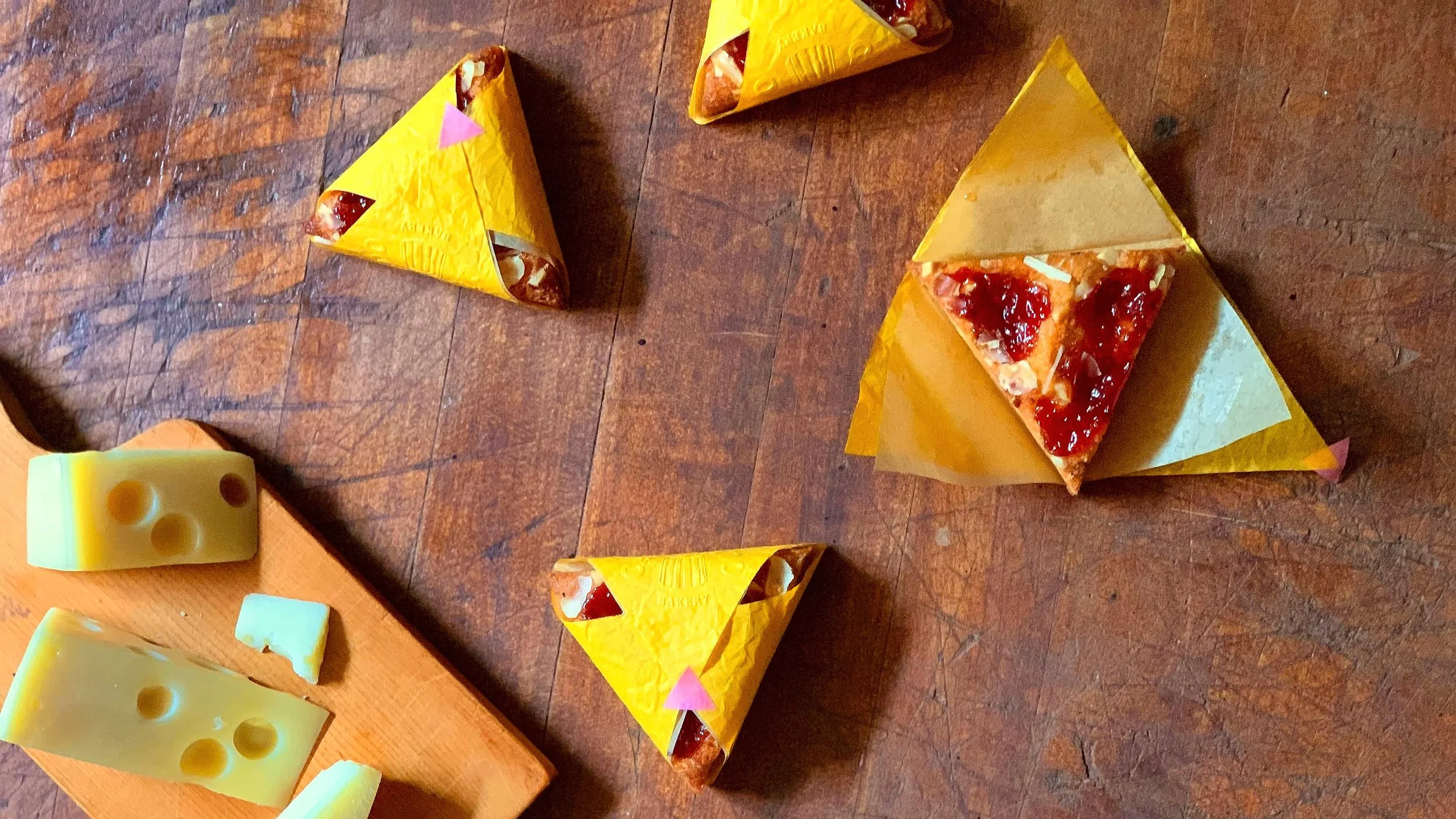
Some pairings are so good they hardly need explaining. Guava and cheese is one of them. The fruit is lush, tangy, and deeply fruity, the cheese rich and full-flavored, and together they find a balance that has made the combination beloved for generations. In Brazil, it is affectionately known as Romeu e Julieta, a name that plays on the idea of guava and cheese as a pair made for each other. Julieta takes that familiar combination and gives it a place of its own in the collection.
A queijadinha is a little coconut and cheese pastry that is wonderfully moist and rich. In Canelado’s version, almond is worked into the batter for an even more tender, delicate crumb, while coconut and cheese remain at the heart of the pastry. Parmesan brings its unmistakable umami richness, a deep, mouthwatering quality that gives the sweetness of the guava something substantial to play against.
Limão-taiti zest brings a fresh citrus note, while coriander seed and cardamom quietly follow the same aromatic thread. Both have citrusy notes of their own, so rather than announcing themselves as spice, they deepen the fragrance of the lime and make the guava feel even more vivid.
The guava is carried through the pastry in two ways. A pink guava infusion moves into the center of the queijadinha, carrying a gentle guava note through the crumb, while a pink guava jelly on top brings a brighter, more concentrated burst of fruit. Toasted Brazil nuts finish it with a buttery crunch.
The result is tender, fragrant, bright, and deeply satisfying, with fruit, citrus, coconut, and Parmesan all held beautifully in balance.
THE SWEET SIDE OF UMAMI.